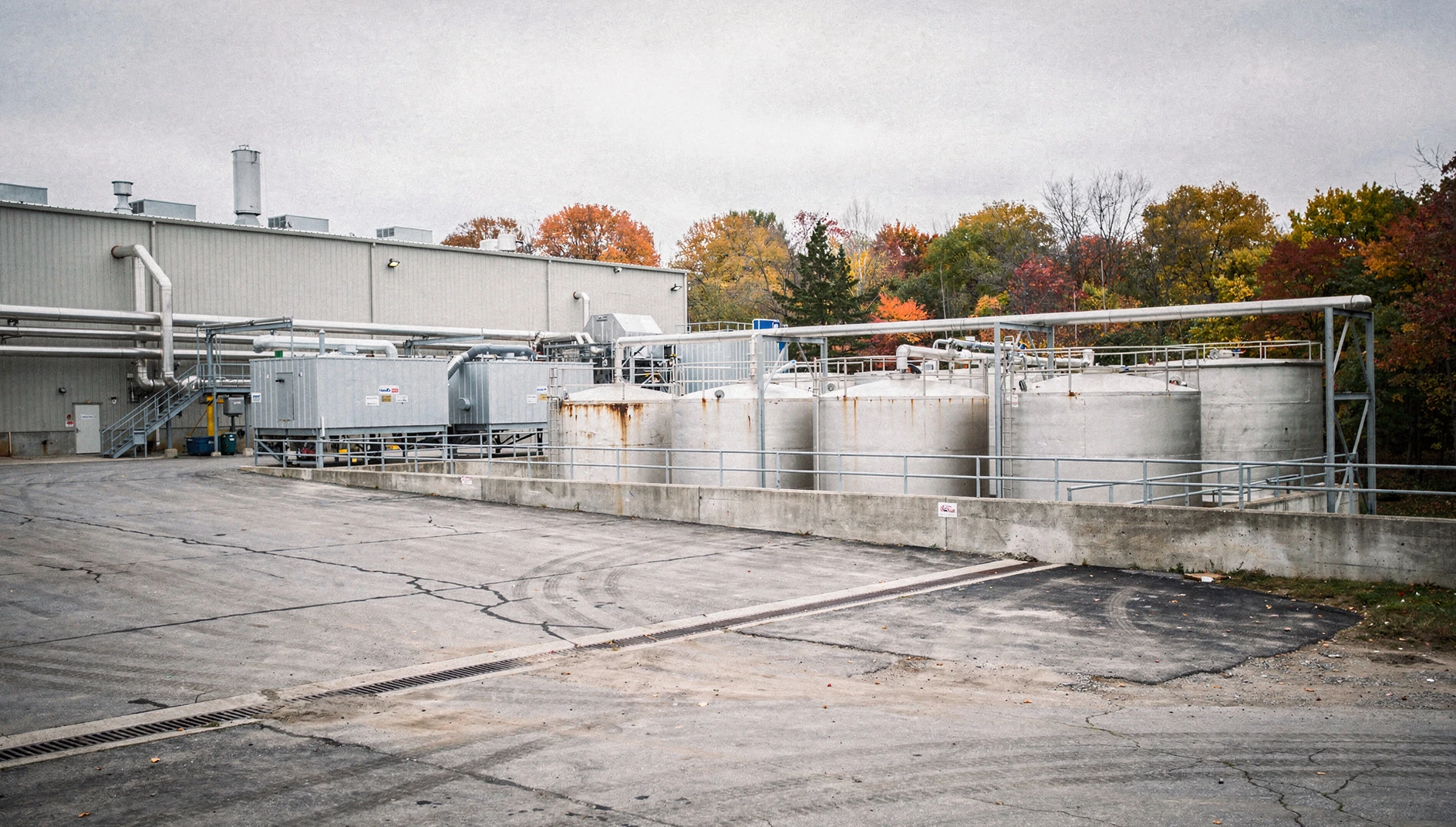
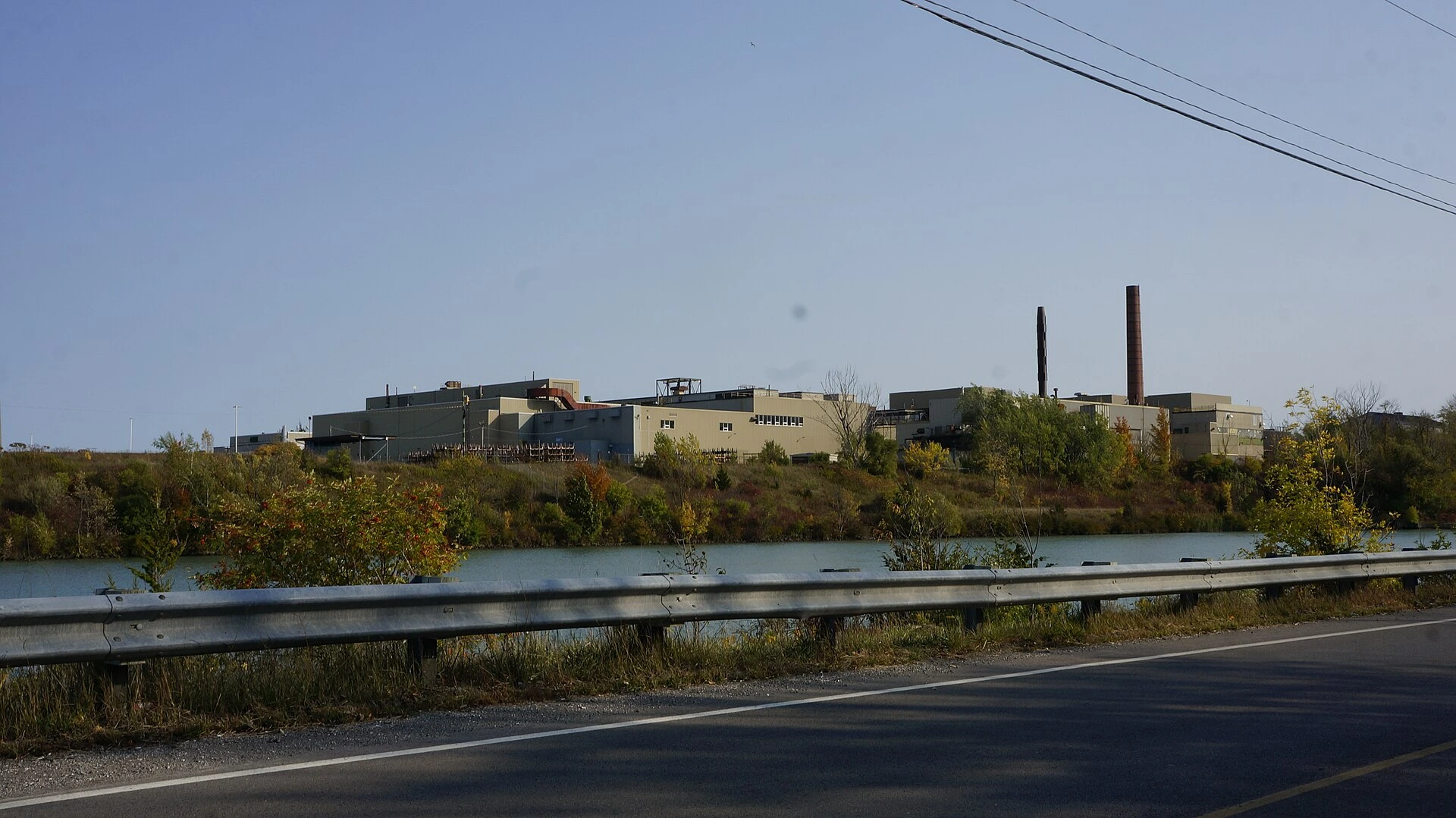
A laboratory has confirmed the presence of asbestos in soil at the former General Motors plant on Ontario Street in St. Catharines, according to a report received by The Pointer on the afternoon of May 27.
The finding marks the first publicly documented confirmation of asbestos in the ground at the 55-acre property, a site that has drawn environmental concern since GM ceased operations there in 2010.
The Pointer, which collected the sample and submitted it for testing, reported that the analysis identified chrysotile asbestos — the most commonly used form of the carcinogenic mineral — at a concentration of 0.5 grams per 100 grams of dry soil, or 0.5 percent.
That level matters. Under Ontario's Occupational Health and Safety Act, Regulation 278 classifies materials containing more than 0.5 percent asbestos as asbestos-containing material, triggering mandatory requirements for handling, removal and disposal. Any excavation, demolition or redevelopment at the site would have to follow strict protocols, including worker protective equipment, containment measures and regulated disposal.
"0.5 is a hard threshold. The limits are based on numerous human health studies. The learning has been done, and there is little room for debate once that threshold is crossed," Dean Fitzgerald, a senior ecologist with Integrated Ecosystem Solutions, told The Pointer.
The lab result arrived the same day members of the Coalition for a Better St. Catharines were at Queen's Park, where St. Catharines NDP MPP Jennie Stevens pressed the provincial government during Question Period to take stronger action on contamination concerns at the site.
The confirmation also follows new property standards orders issued by the City of St. Catharines after inspections identified ongoing concerns at the former GM lands. According to The Pointer, those orders require the property owner to address hazardous conditions, but do not address asbestos or the regulations governing work where the toxin is present.
Earlier environmental assessments left a gap on the question of asbestos in soil. A 2010 Phase I assessment identified asbestos in building materials such as floor tiles, roofing, siding and insulation, but did not sample soil. A later Phase II study identified nearly 25 contaminants of concern in soil and groundwater, but also did not appear to test for asbestos in the ground.
According to The Pointer, freedom of information disclosures have shown that the last extensive environmental assessments, conducted in 2010 and 2012, documented contamination far above allowable limits, including lead at 10 times the human health benchmark, benzene at more than 50 times set limits, PCBs at more than 85 times the limit, and one class of petroleum hydrocarbons at 1,100 times the limit.
The outlet has also reported on council decisions, supported by Mayor Mat Siscoe, that moved the site toward residential development before contamination was fully evaluated, and on dealings involving former mayor Walter Sendzik and the property owner regarding the site's rezoning.
For nearby residents, the risks are personal. Asbestos exposure is linked to mesothelioma, lung cancer and other respiratory diseases, and fibres can become airborne when soil or buildings are disturbed.
Exposure to a designated substance such as asbestos has no cure... The latency period of the disease is from 20 to 40 years after exposure.
John Pula, a St. Catharines resident and former health and safety representative for the Canadian Auto Workers at the Ontario Street plant, told The Pointer. Pula spent years working to protect GM employees from hazardous substances, including asbestos.